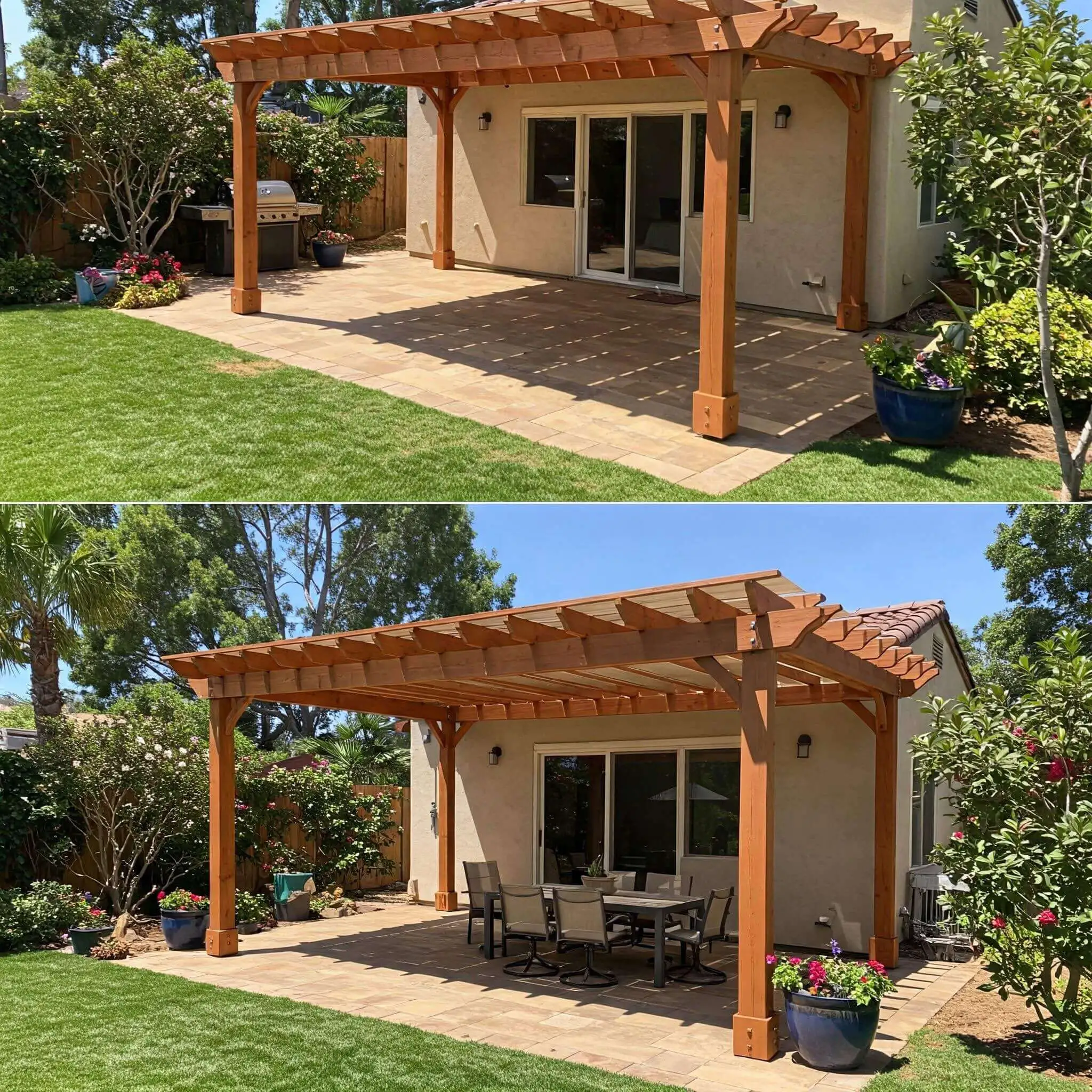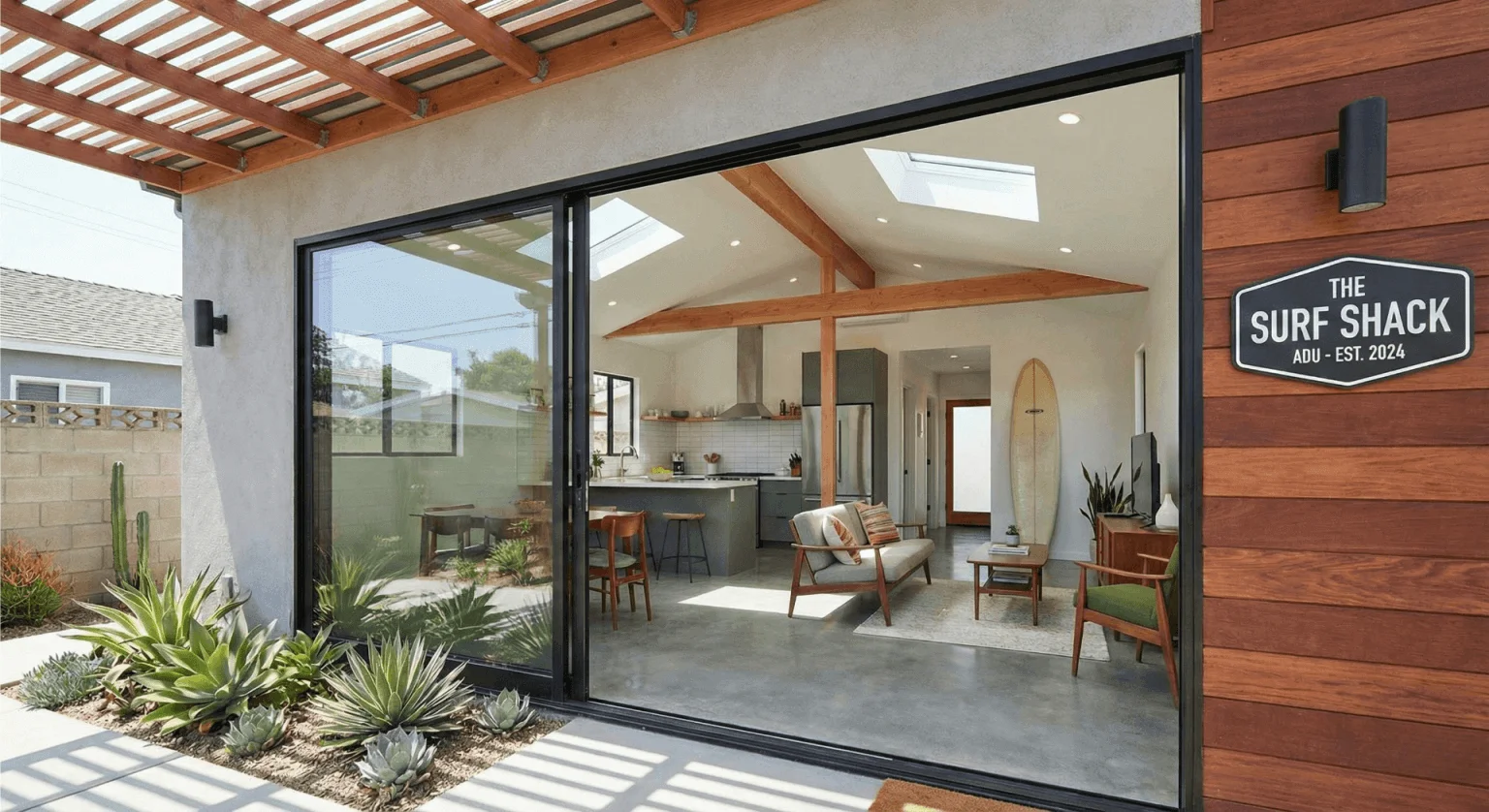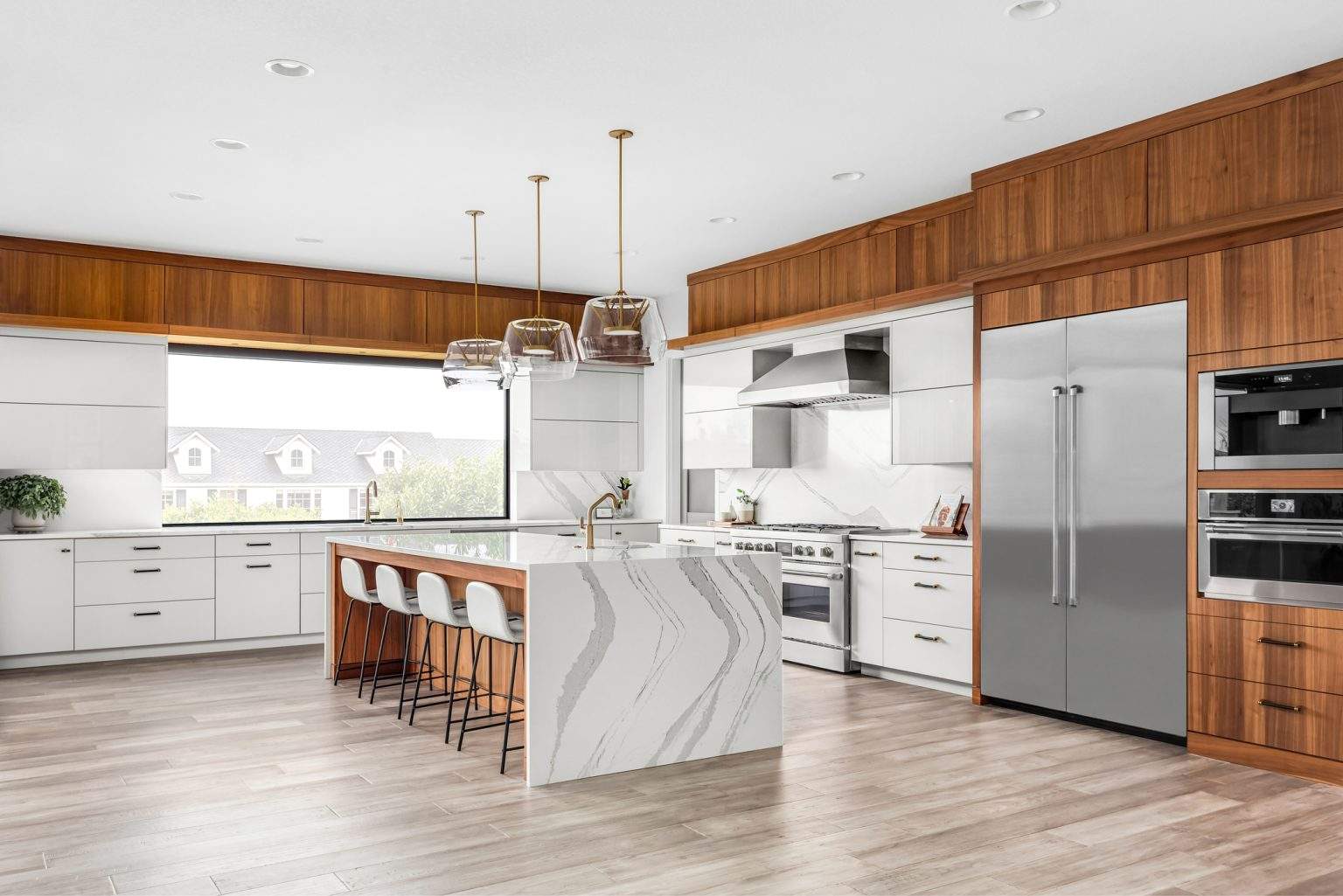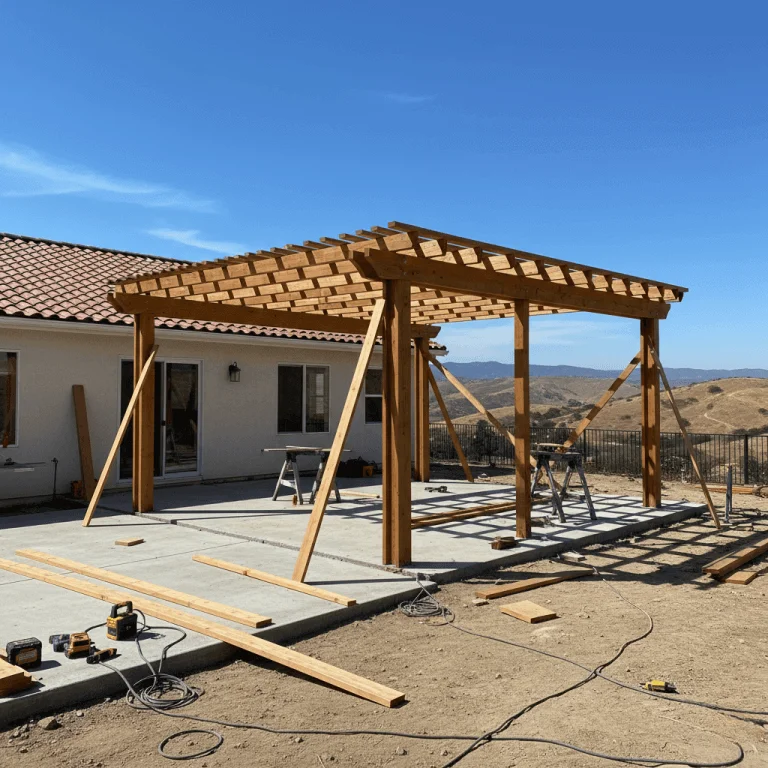
If you’re exploring the best covered patio and pergola designs for year-round entertaining, you’re not alone a striking 77% of homeowners admit they underutilize their current outdoor space, with only 23% saying they use it as much as they’d like, often because their patio simply isn’t designed to handle every season. The right structure, built with the right materials and the right plan, changes that completely.
| Question | Answer |
|---|---|
| What is the best covered patio design for year-round use? | A solid-roof patio cover with integrated heating, lighting, and weather-resistant materials is the most functional for all-season entertaining. |
| What is the difference between a patio cover and a pergola? | A patio cover provides full rain and sun protection with a solid or opaque roof, while a pergola uses an open lattice or louvered structure that filters light and air. |
| Which pergola materials last the longest? | Aluminum and powder-coated steel are the most durable low-maintenance options; cedar and redwood are preferred for a natural aesthetic with proper sealing. |
| Do I need a permit to build a covered patio or pergola? | In most cities including San Diego, yes. An experienced patio cover and pergola builder handles all permitting on your behalf. |
| What features make a pergola usable in winter? | Outdoor heaters, drop-curtain walls, built-in lighting, louvered roofs, and fire features extend comfortable use through cooler months. |
| How long does construction of a patio cover take? | A typical covered patio or pergola construction project takes two to six weeks depending on complexity, materials, and permit timelines. |
| Does a covered patio add value to a home? | Yes. Industry data consistently shows that well-designed outdoor living spaces are among the highest-return renovation investments a homeowner can make. |
Why the Best Covered Patio and Pergola Designs Are Built Around Year-Round Use
Outdoor entertaining is no longer a fair-weather activity — in 2026, the most thoughtfully designed homes treat the backyard as a true extension of the living space, usable in every season.
The difference between a patio you use three months a year and one you use twelve months comes down entirely to how well the structure is designed from the start.
A covered structure addresses the three main barriers that keep people indoors: sun exposure, rain, and temperature. When each of these is addressed in the design phase, the patio or pergola stops being a seasonal feature and becomes a year-round room.
We see this clearly in every project we complete. The clients who invest in a purposefully designed patio cover or pergola report using their outdoor space far more consistently than those who built with aesthetics alone in mind.
The Best Covered Patio Designs for Every Climate and Lifestyle
Not every covered patio design suits every home or homeowner. The best approach matches the structure type to how you actually plan to use the space.
Here are the most popular covered patio styles we build, each suited to different entertaining needs:
- Solid Patio Cover: A fully sealed roof attached to the home. Best for climates with rain or intense sun. Provides maximum weather protection and enables ceiling fans, recessed lighting, and heaters.
- Open-Lattice Cover: A traditional wood or aluminum grid that diffuses sunlight while still providing some overhead structure. Works well in mild climates.
- Alumawood or Composite Cover: Engineered to look like wood but resist rot, fading, and moisture. A low-maintenance renovation choice with long-term durability.
- Attached Patio Cover: Connected directly to the home’s exterior wall, creating a seamless indoor-outdoor flow.
- Freestanding Patio Cover: Positioned anywhere in the yard, ideal for large landscape designs where distance from the home is an advantage.
Each of these structures can be paired with hardscape features like pavers, concrete, or flagstone flooring to complete the outdoor room.
“Pergolas and patio covers come in a range of styles and materials, designed to complement the home and blend into the landscape. Size, layout, and roofing type are selected based on how the space is used and the orientation of the yard.” — Mercury Builders
Top Pergola Designs for Year-Round Outdoor Entertaining in 2026
A well-designed pergola brings structure and beauty to your outdoor space without fully enclosing it. In 2026, pergola design has moved well beyond basic wood posts and open beams.
The most in-demand pergola styles we see homeowners requesting this year include:
- Louvered Roof Pergola: Adjustable slats that open and close with the push of a button. Rain-sensor models close automatically, making this the top choice for true year-round entertaining.
- Bioclimatic Pergola: A more refined version of the louvered model, designed to manage airflow, shade, and light for optimal comfort in every season.
- Steel Frame Pergola: Industrial in aesthetic, extremely durable. Often finished with a powder coat for rust resistance and paired with polycarbonate or shade fabric panels.
- Wood Beam Pergola: Classic in appearance. Cedar, redwood, and Douglas fir are most common. Requires periodic sealing but delivers unmatched warmth and character.
- Modern Minimalist Pergola: Clean horizontal lines, slim aluminum profiles, and integrated LED lighting. A contemporary option that suits modern landscape and hardscape designs.
Choosing the Right Materials for Your Covered Patio or Pergola Build
Material selection is one of the most critical decisions in any patio or pergola construction project. The wrong choice leads to premature deterioration, high maintenance costs, and a structure that looks dated within a few years.
Here’s a clear comparison of the most common materials used in covered patio and pergola construction:
| Material | Durability | Maintenance | Best For |
|---|---|---|---|
| Aluminum | Excellent | Very Low | Modern designs, coastal climates |
| Cedar / Redwood | Good | Moderate | Traditional and natural aesthetics |
| Composite / Alumawood | Excellent | Very Low | Wood look without wood upkeep |
| Steel | Outstanding | Low | Industrial and contemporary builds |
| Vinyl / PVC | Good | Low | Budget-conscious renovation projects |
We always match material recommendations to the local climate, the home’s existing architecture, and the homeowner’s maintenance preferences.
For San Diego homes specifically, aluminum and composite materials perform exceptionally well given the region’s sun intensity and coastal air.
Hardscape and Landscape Integration: The Foundation of a Great Covered Patio Design
The best covered patio and pergola designs for year-round entertaining don’t exist in isolation. They are part of a larger outdoor vision that weaves hardscape and landscape elements into a unified, livable space.
A well-planned patio begins at ground level. The hardscape surface underneath your pergola or cover directly affects drainage, aesthetics, and how comfortable the space feels during use.
Popular hardscape flooring options include:
- Concrete pavers: Durable, versatile, and available in dozens of colors and patterns. Ideal for structured hardscape layouts around pergolas.
- Natural stone: Flagstone and travertine deliver a premium look and stay cool underfoot during warm months.
- Stamped concrete: A cost-effective way to mimic stone or tile for a cohesive patio surface.
- Exposed aggregate: A textured concrete finish that provides traction and visual interest.
- Porcelain tile: A sleek, weather-resistant option increasingly popular in contemporary outdoor renovation projects.
The landscape surrounding your covered structure matters just as much. Strategic planting along the perimeter of your patio adds privacy, softens the hardscape edges, and makes the space feel like a natural retreat rather than a concrete pad.
We coordinate both hardscape and landscape planning in a single design phase so the finished result looks intentional and cohesive from every angle. You can see examples of this approach in our completed project portfolio.
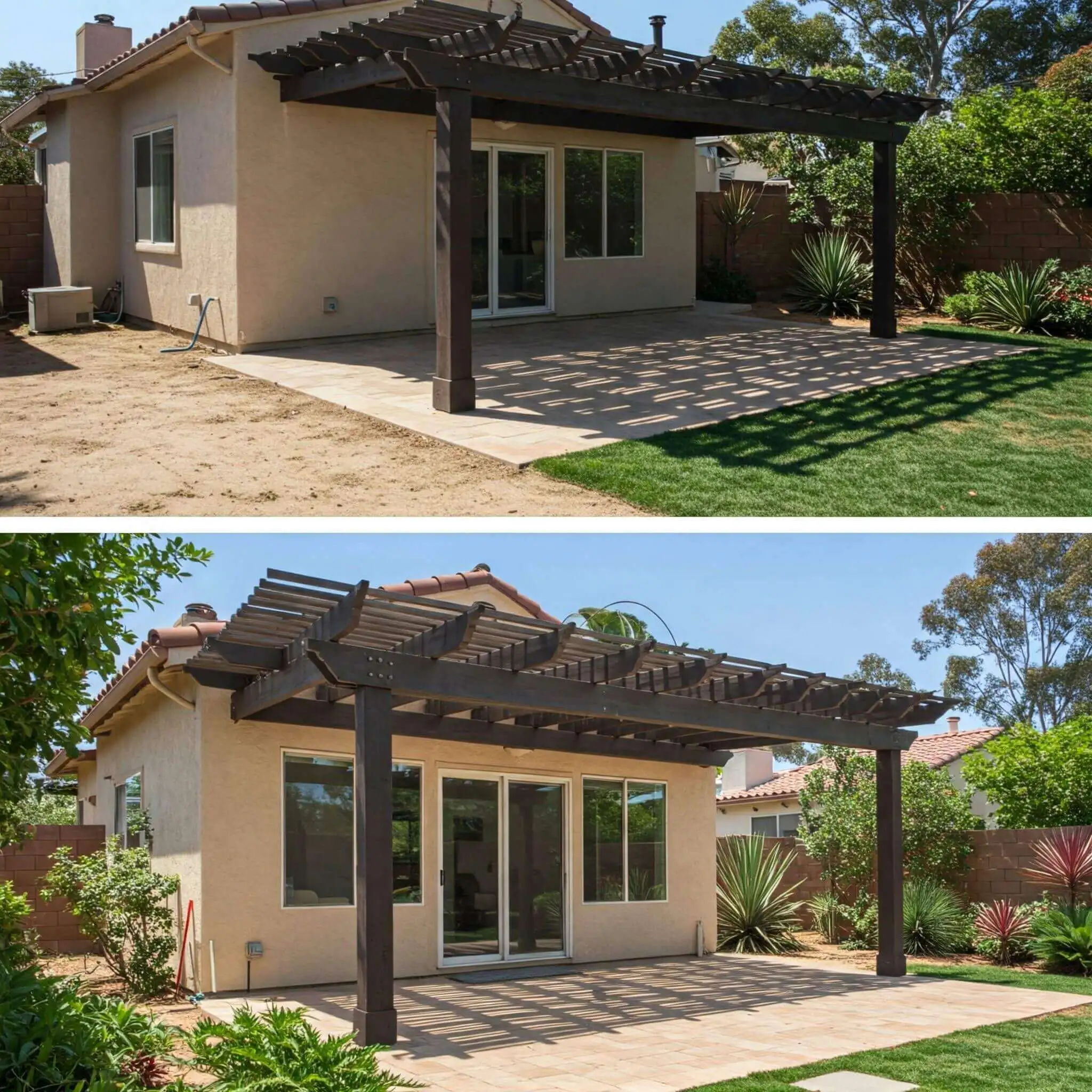
Deck vs. Patio: Which Base Best Supports a Covered Pergola Structure?
One of the most common questions homeowners ask during the design phase is whether to build their covered structure over a deck or a patio slab. Both are valid, and the right answer depends on your yard’s topography, budget, and intended use.
When to choose a deck:
- Your yard has a significant slope that would require extensive grading for a patio slab.
- You want the warm, natural feel of a wood or composite surface underfoot.
- You plan to use the elevated space for outdoor dining and want clear sightlines across the yard.
- You need under-deck storage space.
When to choose a patio:
- Your yard is relatively flat and the transition from interior to exterior is at grade level.
- You want a seamless flow from an indoor kitchen or living area to an outdoor entertaining zone.
- You prefer a hardscape surface like pavers or stamped concrete over wood or composite decking.
- You are integrating large outdoor furniture, a fire table, or a kitchen structure.
In many of our projects, a combination works best. A deck platform transitions into a paved patio area, creating multiple zones within a single entertaining space. Explore our deck design and installation services to see how we approach elevated outdoor structures.
Lighting, Heating, and Wall Features That Enable Year-Round Patio and Pergola Use
A covered structure alone does not guarantee year-round use. The features you add to it determine whether the space actually functions in February as comfortably as it does in July.
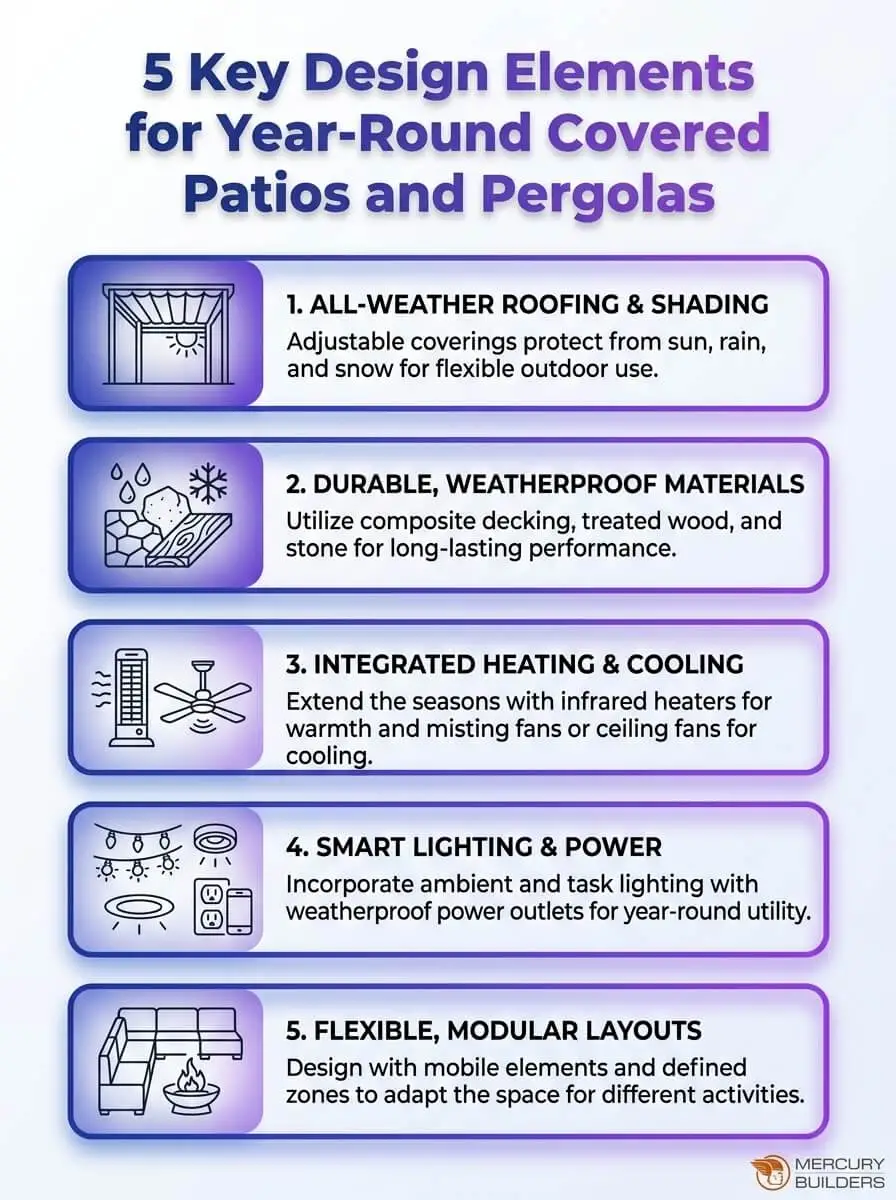
In 2026, the most functional outdoor entertaining spaces include at least three of the following climate and comfort features:
- Infrared ceiling heaters: Mounted to the underside of the cover, these heat people and surfaces directly rather than warming the air. They are the most efficient heating option for open structures.
- Outdoor fire features: Gas fire pits and fireplaces built into a patio wall or freestanding within the structure create both heat and a natural focal point for gathering.
- Drop curtains and shade screens: Retractable fabric or polycarbonate panels attached to the perimeter of the structure act as a wall when needed, blocking wind and rain without permanently enclosing the space.
- Integrated LED lighting: Recessed ceiling fixtures, step lighting in the hardscape, and string lights woven through a pergola’s beams extend usable hours into evenings year-round.
- Smart controls: App-integrated systems that manage lighting, heating, and louvered roofs from a single interface are among the fastest-growing features we install in 2026.
The wall surrounding or adjacent to the covered space also plays a role. A stucco or stone accent wall provides wind protection, anchors the structure visually, and creates a surface for mounting heaters, televisions, or landscape lighting.
Outdoor heaters alone can raise the ambient temperature of a covered patio or pergola by 20°F to 30°F, which in most climates means the difference between a structure that gets used six months a year and one that gets used twelve.
Outdoor Kitchen and Entertainment Features for the Best Pergola Entertaining Spaces
The covered patio and pergola designs that homeowners enjoy the most are those built around a clear entertaining purpose. An outdoor kitchen under a solid cover or louvered pergola roof is the centerpiece of that vision.
A well-equipped outdoor kitchen under a covered structure typically includes:
- Built-in grill or pizza oven: Permanently mounted into a hardscape island or wall-mounted unit. Pizza ovens are the most requested single feature in outdoor kitchen renovations in 2026.
- Outdoor refrigerator and bar: Weather-rated under-counter refrigeration keeps drinks and prep ingredients accessible without trips back indoors.
- Stainless steel countertops: Durable, weather-resistant work surfaces that hold up against moisture, UV, and heat.
- Sink with plumbing: An increasingly popular addition as homeowners move toward fully self-contained outdoor rooms.
- TV and audio integration: Weatherproof entertainment systems mounted to the structural wall or overhead beams of the pergola.
When an outdoor kitchen is part of the plan from the beginning, we design the covered structure around the kitchen’s size, ventilation needs, and workflow rather than adding it as an afterthought.
The Construction Process: What to Expect When Building a Covered Patio or Pergola
Understanding the construction process helps homeowners make better decisions and set realistic expectations from the start. Every covered patio and pergola build we complete follows a clear, structured sequence.
Step 1: Design Consultation and Site Assessment
We begin with an on-site meeting to understand how you plan to use the space, your preferred aesthetic, your budget, and any structural constraints. This conversation shapes every decision that follows.
Step 2: Design Development and Permitting
Our design team develops detailed plans based on the consultation, including structural layouts, material specifications, and hardscape integration. We then handle all permit applications with the local municipality on your behalf. This is a step many homeowners dread, but we manage it as part of the standard process.
Step 3: Construction and Installation
Once permits are approved, our construction team begins the build. We follow a structured schedule and communicate clearly at each stage so you always know what is happening and what comes next.
Step 4: Final Walkthrough and Punch List
Before any project is considered complete, we conduct a detailed final walkthrough. Every detail, from the finish of the wall anchors to the alignment of the paver hardscape, is checked against the original plan. We don’t consider the project finished until you’re fully satisfied.
The full patio design and installation process typically takes two to six weeks for covered structures, depending on complexity, material lead times, and permit processing speed.
How the Right Builder Makes the Best Covered Patio and Pergola Designs a Reality
Design ideas are easy to find. Finding a builder who can execute them accurately, on time, and without surprises is the harder challenge.
The most common complaints homeowners share after a poor construction experience fall into three categories: unexpected cost increases, poor communication during the build, and workmanship that didn’t match what was presented in the design phase.
We built our process specifically around eliminating all three of those problems.
Here’s what separates a quality patio and pergola builder from the rest:
- Transparent pricing: No hidden fees, no scope creep without approval, and no surprises at the final invoice. Our quotes cover the full project from site prep to cleanup.
- Permit expertise: A competent builder handles all permits as a standard part of the renovation. If a contractor asks you to manage permitting yourself, that’s a warning sign.
- Clear communication: You should know what is happening at every stage of construction. We provide structured updates and keep schedules realistic from day one.
- Design and build in one team: When the same company that designs your covered patio is also the team that builds it, nothing gets lost between the concept and the construction.
- Portfolio evidence: A builder who is proud of their work shows it. Ask to see completed patio and pergola projects similar to what you’re envisioning.
Whether your project is a straightforward attached patio cover or a complex freestanding pergola with a full outdoor kitchen, hardscape flooring, and integrated lighting, the right builder shapes every part of the experience.
Our full outdoor remodeling services cover everything from initial landscape planning to the final sweep of the construction site. If your goals extend beyond the patio, our full home remodeling services bring the same standards indoors.
“A well-designed structure adds value and usability to your outdoor living space. We listen, design, and deliver a home that’s everything you imagined and more.”
Start Building the Year-Round Outdoor Space Your Home Deserves
The best covered patio and pergola designs for year-round entertaining share one thing in common: they were planned with purpose, built with quality materials, and executed by a team that understands both design and construction.
Whether you’re drawn to a sleek aluminum louvered pergola, a classic wood-beam structure over a paver patio, or a fully equipped outdoor kitchen under a solid cover, the right design exists for your home, your landscape, and how you actually want to live.
In 2026, there is no reason to have a backyard you don’t fully use. With the right combination of a covered structure, hardscape foundation, lighting, heating, and wall features, your patio becomes a true extension of your home that works for you every month of the year.
Your vision and satisfaction are our top priorities throughout every stage of the renovation. No obligation, no hidden fees, and no time wasted. Your dream outdoor space starts with a single conversation.
Ready to explore what’s possible for your home? Start with our patio covers and pergolas service page and let’s build something worth gathering around.