Choosing the right paver patterns for modern patios is one of the most impactful decisions you’ll make in any outdoor renovation project, and it affects far more than just aesthetics. The pattern you pick now also shapes how your patio drains, performs under foot traffic, and holds up over the long term.
Why Paver Pattern Selection Matters More Than Most Homeowners Realize
When most people start planning a patio renovation, they think about color and material first. But the pattern you choose for your paver layout directly influences structural performance, water management, and how your overall landscape ties together.
Patterns determine the direction of joint lines, which affects how forces from foot traffic, furniture weight, and thermal expansion move through the surface. Choosing the wrong layout for your specific site conditions can lead to shifting, cracking, or uneven settling over time.
As San Diego’s premier design-build team, we always start with a site visit and a full assessment of your yard’s slope, drainage flow, and sun exposure before recommending a single pattern. Getting this step right is what separates a beautiful patio that lasts decades from one that needs repairs in three years.
The Most Popular Paver Patterns for Modern Patios in 2026
Modern patio design in 2026 leans toward clean geometry, strong sightlines, and layouts that visually connect interior rooms to outdoor living areas. Here are the patterns we recommend most often for contemporary San Diego homes.
Running Bond (Stacked or Offset)
Running bond is one of the simplest and most versatile patterns available. Each row of pavers is offset by half a unit from the row above, creating a clean horizontal rhythm that reads as modern and uncluttered.
This pattern works especially well on rectangular patios and long, narrow spaces where you want to draw the eye outward toward the landscape. It is also one of the easiest patterns to cut and install around curved edges or fixed structures like a retaining wall.
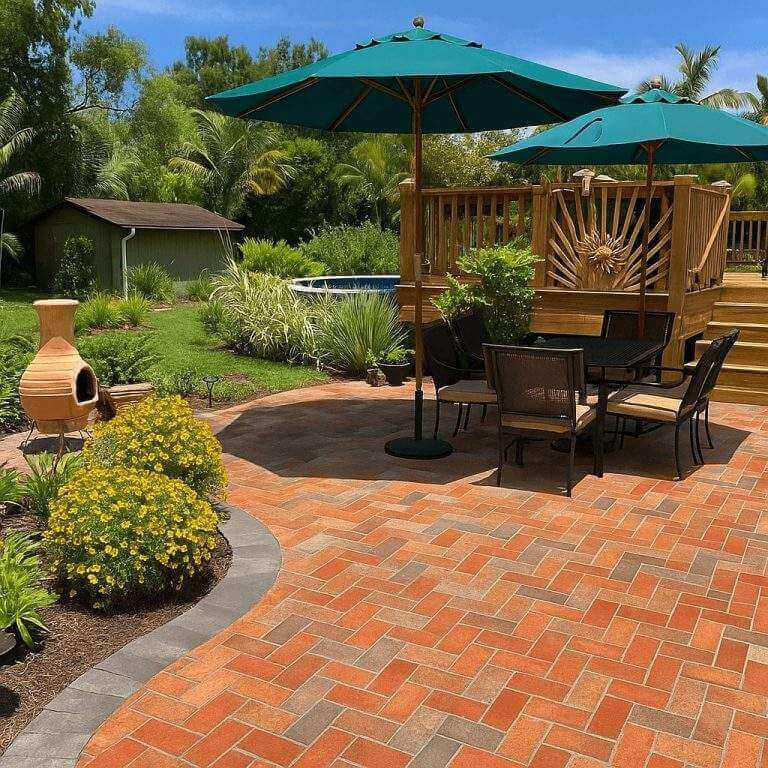
Herringbone (45-Degree and 90-Degree)
Herringbone is the strongest interlocking pattern available for concrete pavers. The angled, V-shaped arrangement locks each paver against its neighbors, distributing load more evenly than any straight-joint layout.
The 45-degree diagonal version creates a dynamic, energetic feel that guides the eye across the space. The 90-degree version is slightly more restrained and pairs well with contemporary architecture and clean-lined outdoor furniture.
Large-Format Grid (Ashlar and Modular)
Large-format square or rectangular pavers laid in a simple grid or ashlar pattern are a hallmark of modern hardscape design. These layouts use oversized units (often 24×24 inches or larger) with tight, thin joints to create a sleek, almost seamless surface.
Porcelain pavers, which typically run $30 to $55 per square foot installed, are an ideal material choice for this look. Their consistent sizing and ultra-low porosity give large-format grid patios a high-end, architectural appearance.
Basket Weave
Basket weave uses pairs of pavers laid alternately in horizontal and vertical positions, creating a classic interlocking grid. While it has traditional roots, modern versions using large-format concrete pavers and neutral tones read as contemporary rather than dated.
This pattern works well as a primary field layout for larger patios where you want visual interest without the complexity of a diagonal herringbone.
Pinwheel and Windmill Patterns
These patterns combine a large central paver with four smaller pavers arranged around it. The result is a geometric, almost artisanal look that adds texture and visual complexity to outdoor living areas.
Pinwheel layouts pair especially well with mixed-material designs, where the central paver is a contrasting color or material to the surrounding field. They work beautifully as accent zones within a larger patio construction project.
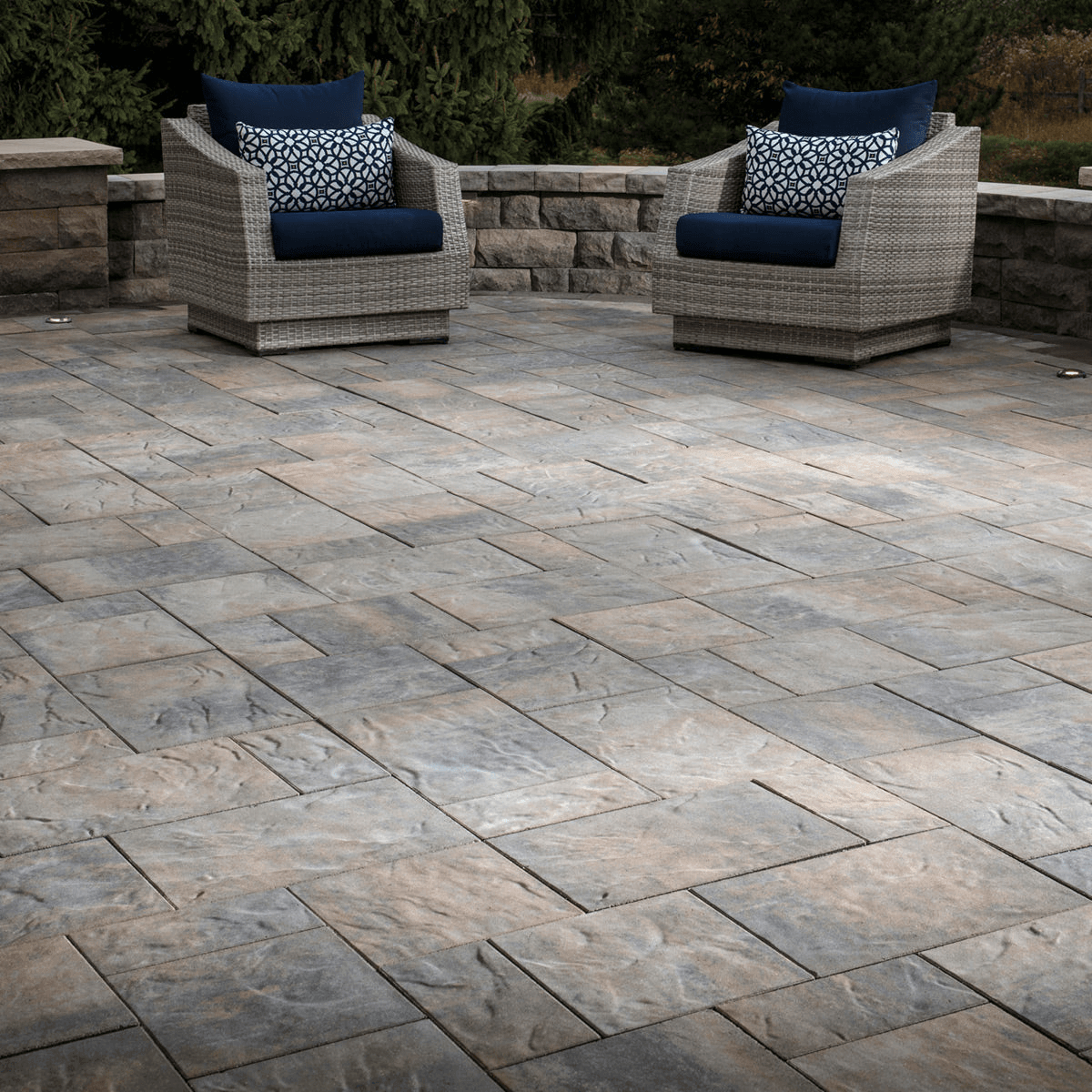
How to Choose the Right Paver Patterns for Modern Patios Based on Patio Size and Shape
Not every pattern works equally well in every space. The size and shape of your patio plays a major role in determining which layout will look proportional, balanced, and intentional once installed.
- Small patios (under 150 sq ft): Use simple running bond or large-format grid patterns. Busy patterns in tight spaces feel cluttered and visually shrink the area.
- Medium patios (150 to 400 sq ft): Herringbone or modular ashlar patterns work well. You have enough surface area for the pattern to fully develop and read as a design choice.
- Large patios (400+ sq ft): Consider combining two patterns with a defined border band. A herringbone field with a running bond border, for example, creates elegant zone separation without overcomplicating the layout.
- L-shaped or irregular patios: Running bond and grid layouts are far easier to cut and fit around non-rectangular boundaries than diagonal patterns.
- Transitional spaces (patio to deck or patio to wall): Match the paver joint direction to the dominant architectural line of the adjacent structure for a cohesive transition.
Our team provides full 3D renderings before any construction begins, so you can see exactly how your chosen pattern will look at full scale before a single paver is placed.
Choosing the Right Paver Patterns for Modern Patios: Material Compatibility
The material you choose directly limits or expands which patterns are practical. Not all pavers come in every size, and some materials are better suited to specific joint widths and geometric configurations.
Concrete Pavers
Concrete pavers are the most versatile option for pattern work. They are available in a wide range of sizes, from standard 4×8 brick-format units to large 24×24 slabs, and they can be cut precisely on-site to fit any configuration.
Standard paver patio installations using concrete pavers typically cost between $18 and $40 per square foot installed. This range makes concrete pavers the most accessible entry point for homeowners who want a distinctive pattern without a premium material cost.
Porcelain Pavers
Porcelain pavers are a premium hardscape option that pairs best with large-format grid and ashlar patterns. Their precise manufacturing tolerances mean they can be installed with very thin joints, which reinforces the sleek, modern aesthetic.
At $30 to $55 per square foot installed, porcelain is a smart investment for high-visibility patio areas, particularly those adjacent to pools or outdoor kitchens where water resistance and stain performance are priorities.
Flagstone and Travertine
Natural stone materials like flagstone and travertine are typically used in irregular or random coursing patterns rather than geometric configurations. They suit Mediterranean and transitional design styles more than strict contemporary ones.
If your home’s architecture has warm, natural tones and your landscape already features organic planting, flagstone and travertine can create a beautiful patio surface. For clean modern homes, stick with manufactured concrete or porcelain pavers.
Brick Pavers
Brick is a traditional material that works beautifully in herringbone and running bond patterns. Modern brick pavers come in charcoal, slate, and dark earth tones that update the classic look for contemporary outdoor spaces.
Brick pairs especially well with patio designs that include a low retaining wall or raised planter border, creating a unified material palette across the full hardscape.
How Drainage and Site Conditions Should Guide Your Paver Pattern Choice
One of the most overlooked factors when choosing paver patterns for modern patios is how the layout interacts with your site’s drainage requirements. In San Diego, where water conservation and runoff management are ongoing concerns, this is more important than ever in 2026.
Permeable paver systems use wider, aggregate-filled joints between pavers to allow water to drain directly into the subbase rather than running off the surface. This approach requires specific joint widths that are compatible with some patterns and not others.
- Herringbone patterns are the most recommended layout for permeable interlocking concrete paver systems because their tight interlock geometry resists lateral movement even without compacted sand joints.
- Running bond patterns work well for semi-permeable applications where some water passes through jointing material and the rest drains to a sloped surface edge.
- Large-format grid patterns with tight joints are generally not recommended for permeable systems because the limited joint area restricts water infiltration.
Our team handles permit acquisition and all drainage compliance approvals as part of our standard construction process. You never need to figure out the technical requirements on your own. We build the drainage solution into the design from day one.
Check out our 2026 San Diego patio design guide for a deeper breakdown of material costs, drainage considerations, and what to expect at each stage of your outdoor project.
Coordinating Paver Patterns With Your Broader Landscape and Hardscape Design
A patio does not exist in isolation. The best patio renovation projects treat the surface pattern as one element of a complete outdoor design that includes the surrounding landscape, retaining walls, deck areas, fencing, and planting zones.
Here is how to make your paver pattern work with the rest of your outdoor space.
Connecting the Patio to the Deck
If your outdoor living area includes both a paver patio and a raised deck, the paver pattern should visually anchor the transition point. Running the paver joint lines parallel to the deck framing creates a logical visual connection between the two surfaces.
Our deck design and installation services are frequently paired with patio construction projects, and our designers plan both surfaces together so the proportions and sightlines work as a unified composition.
Working With Retaining Walls
A retaining wall adjacent to your patio creates a strong visual edge. The pattern you choose should either align with the wall’s coursing (for a cohesive, formal look) or deliberately contrast with it (for a layered, modern look).
Diagonal herringbone patterns, for example, create a dynamic tension against the horizontal lines of a block retaining wall, which many homeowners find visually exciting without feeling chaotic.
Connecting to Landscape Planting Zones
When your patio transitions into planted landscape areas, a defined border band in a contrasting paver color or size helps establish a clear edge. This is especially useful in low-maintenance landscape designs where the ground cover or mulch meets the paved surface directly.
Our team handles full landscape remodeling and hardscape design together, so the patio pattern, planting plan, and drainage all get designed as one coordinated system rather than three separate projects bolted together.
Best Paver Patterns by Patio Use Case: A Quick Reference Guide
Different outdoor living scenarios call for different paver pattern strategies. The table below gives you a quick reference for matching your patio’s primary function to the most effective pattern options.
| Patio Use Case | Recommended Pattern | Best Material | Key Benefit |
|---|---|---|---|
| Dining and entertaining | Large-format grid / Ashlar | Porcelain pavers | Flat, stable surface for furniture and foot traffic |
| Pool surrounds | Running bond or Ashlar | Porcelain or travertine | Slip resistance, heat reflectivity, water drainage |
| High foot-traffic path or entry | 90-degree Herringbone | Concrete pavers | Maximum interlock strength and long-term stability |
| Outdoor kitchen zone | Grid with defined border | Concrete or porcelain | Clean zone definition, easy to keep clean |
| Fire pit seating area | Circular or fan pattern | Concrete pavers | Radiating layout reinforces the circular focal point |
| Permeable drainage area | 45-degree Herringbone | Permeable concrete pavers | Optimal water infiltration with structural stability |
| Transitional walkway to yard | Running bond | Concrete pavers | Directional flow, easy cutting around curves |
Common Mistakes Homeowners Make When Choosing Paver Patterns for Modern Patios
Even with the right materials and a solid budget, pattern selection mistakes can undermine the entire look and function of a new patio. Here are the errors we see most often as a local San Diego builder.
Choosing a Pattern Before Confirming Paver Sizing
Some patterns require specific aspect ratios to work correctly. A true herringbone pattern requires a 2:1 length-to-width ratio (for example, 4×8 inch or 6×12 inch pavers). Using square pavers in a herringbone layout produces a pattern that looks off-center and unbalanced.
Always confirm your paver dimensions are mathematically compatible with your chosen pattern before purchasing materials or committing to a design direction.
Ignoring the Direction of the Pattern Relative to the House
A herringbone pattern running diagonally away from the house creates an energetic, expansive feeling. The same pattern running parallel to the house wall can feel compressed and small. Pattern orientation relative to your home’s architecture matters enormously.
Our team always evaluates the dominant visual lines of your home and outdoor space before determining pattern orientation during the design phase.
Skipping a Border Band to Save Money
Border bands at the perimeter of a patio are not purely decorative. They provide a straight, defined edge that contains the field pavers, makes the cut line manageable, and signals intentional design rather than an unfinished edge.
Skipping the border almost always makes a patio look cheaper, even if the field pattern is excellent. Budget for the border from the start of your renovation planning.
Over-Complicating the Pattern in a Small Space
Complex patterns like pinwheel, fan, or multi-pattern combinations work best on larger surfaces where the design can fully develop. In a small backyard patio, these patterns create visual noise that makes the space feel smaller and busier than it is.
Simpler patterns in high-quality materials always outperform complex patterns in budget materials. Invest in the material first, and let the pattern be secondary.
How to Choose the Right Paver Patterns for Modern Patios: The Mercury Builders Approach
At Mercury Builders, choosing the right paver pattern for your patio renovation is never a guessing game. Our process is built to remove the stress and confusion that often surrounds outdoor construction projects.
Our founder Tal Sharf built Mercury Builders specifically because too many homeowners were being left frustrated by contractors who made big decisions without proper consultation, communication, or follow-through. We do things differently. Here is exactly how our team guides you through paver pattern selection.
Step 1: Discovery and Site Assessment
We start with a full site visit where we assess your yard’s dimensions, slope, sun exposure, drainage behavior, and connection points to the home’s interior. We also discuss how you plan to use the patio, who uses it, and what adjacent features like a deck, wall, or landscape planting zone need to integrate with the new surface.
This is where we rule out patterns that will not perform well for your specific site conditions and start narrowing down the options that will.
Step 2: Design with 3D Renderings
Our designers create detailed plans and full 3D renderings so you can see exactly how your paver pattern will look at scale before construction begins. You can compare pattern orientations, border options, and material combinations side by side without committing to anything.
This step eliminates the most common source of post-project disappointment: choosing a pattern from a small sample that looks completely different at full scale across a 300-square-foot patio.
Step 3: Build with Daily Updates
Once the design is approved and permits are secured, our construction team gets to work with daily progress updates so you always know exactly where your project stands. Our quality control and safety inspections happen throughout the build, not just at the end.
Every project we complete is backed by our 2-year craftsmanship warranty, and we are OSHA 30-Hour Safety Certified with a BBB A+ Rating and CA License #1093000 (including C27 Landscaping Contractor designation).
Ready to see your patio options in full detail? Explore our backyard remodeling services and book a free consultation with our team today.
Paver Pattern and Hardscape Budget Planning: What to Expect in 2026
Pattern complexity directly affects your installation cost. More complex patterns require more precise cuts, longer installation time, and higher material waste factors, all of which add to the final project cost.
Here is a general cost framework for paver patio construction in San Diego in 2026.
| Pattern Type | Installation Complexity | Estimated Material Waste | Cost Range (Installed) |
|---|---|---|---|
| Running bond | Low | 5 to 7% | $18 to $30/sq ft |
| Herringbone (90°) | Medium | 7 to 10% | $22 to $36/sq ft |
| Herringbone (45°) | Medium-High | 10 to 15% | $24 to $40/sq ft |
| Large-format grid | Medium | 5 to 8% | $30 to $55/sq ft (porcelain) |
| Pinwheel or fan | High | 12 to 18% | $28 to $45/sq ft |
| Mixed pattern with border | High | 10 to 15% | $28 to $50/sq ft |
Keep in mind that base preparation, drainage infrastructure, and any adjacent retaining wall or deck construction will affect total project cost. We provide detailed, itemized estimates so you know exactly what you’re paying for before any work begins.
For a full breakdown of what drives patio costs in the San Diego market, our low-maintenance landscape guide covers material choices, drainage considerations, and long-term maintenance trade-offs that affect your total investment.
How to Choose the Right Paver Patterns for Modern Patios
Learning how to choose the right paver patterns for modern patios is genuinely rewarding when you approach it systematically. Start with your patio’s function and size, evaluate how the pattern interacts with drainage and adjacent features like your deck, wall, and landscape, then match the pattern to a material that supports the visual and structural goals of the design.
Whether you’re drawn to the clean geometry of a large-format porcelain grid, the structural strength of a herringbone, or the classic appeal of a running bond layout, the right pattern exists for your space. The key is getting the base design work, site assessment, and installation done by a builder who treats your project with the same care they’d give their own home.
As a boutique hardscape and outdoor renovation company, we work with a limited number of homeowners at a time so that every project gets our full attention from design through construction. Our team covers all of San Diego, including Escondido, Del Mar, Carlsbad, Oceanside, and beyond.
Ready to start your patio renovation? Book your free consultation with the Mercury Builders team today and let us show you exactly what the right paver pattern can do for your outdoor space.
Frequently Asked Questions
What is the best paver pattern for a modern patio in 2026?
The best paver patterns for modern patios in 2026 are large-format grid layouts using porcelain pavers, 90-degree herringbone, and clean running bond arrangements. These patterns offer the strong geometric lines, low visual noise, and contemporary proportions that define modern hardscape design right now.
Is herringbone a good paver pattern for a backyard patio?
Yes, herringbone is one of the most recommended paver patterns for backyard patios because it offers the strongest interlocking structure of any layout, making it ideal for high-traffic areas. Both 45-degree and 90-degree versions work well for modern patios, with the 90-degree version reading as cleaner and more restrained.
How do I choose the right paver pattern for a small patio?
For small patios, choose simple patterns like running bond or large-format grid with minimal joints, which keep the surface visually open and avoid the cluttered look that complex patterns create in tight spaces. The simpler the pattern, the more the space and material quality take center stage.
Can paver patterns be changed after installation?
One of the major advantages of interlocking concrete pavers is that they are modular and can be lifted, repositioned, and reinstalled if you want to change your patio layout in the future. This makes paver patios one of the most flexible long-term hardscape investments compared to poured concrete slabs.
What paver pattern is best for drainage on a patio?
The 45-degree herringbone pattern is considered the best option for permeable paver systems because its tight interlock geometry maintains stability even with aggregate-filled open joints. Running bond is also commonly used for semi-permeable patio applications in San Diego.
How much does paver patio installation cost in San Diego in 2026?
In San Diego in 2026, paver patio installation typically costs $18 to $40 per square foot for standard concrete pavers and $30 to $55 per square foot for porcelain pavers. More complex patterns like diagonal herringbone or mixed designs with border bands fall toward the higher end of these ranges due to increased cutting and labor time.
Do I need a permit to build a paver patio in San Diego?
Permit requirements for paver patio construction in San Diego depend on the project size, drainage impact, and whether the work connects to any structures. A licensed local builder handles all permit acquisition and approvals as part of the construction process, ensuring your project meets all local code requirements from the start.