Modern master bathroom remodeling continues to evolve in 2026, and walk-in showers now lead most renovation plans. In fact, 55% of homeowners prioritize a larger shower instead of keeping a bathtub in their primary bathroom, showing a clear shift toward spacious, spa-inspired shower design.
| Common Question | Expert Answer |
|---|---|
| What is the most popular walk-in shower style in 2026? | Frameless glass walk-in showers with minimal hardware remain the top choice for modern master bathroom renovations. |
| Are walk-in showers good for home value? | Yes. Spacious walk-in showers with modern tile and lighting are a major selling point in high-end bathroom remodeling projects. |
| Where can homeowners start planning a bathroom remodel? | Explore professional design guidance at Mercury Builders bathroom remodeling and design services. |
| Can walk-in showers work in full-home renovations? | Yes. Many clients incorporate them during full home remodeling projects to modernize multiple living spaces at once. |
| What if the renovation includes indoor and outdoor living updates? | Many homeowners combine bathroom updates with outdoor remodeling and patio upgrades for a cohesive property renovation. |
| Who manages the construction process? | A licensed design-build contractor manages design, permits, and construction from concept to completion. |
1. Frameless Glass Walk‑In Shower Designs
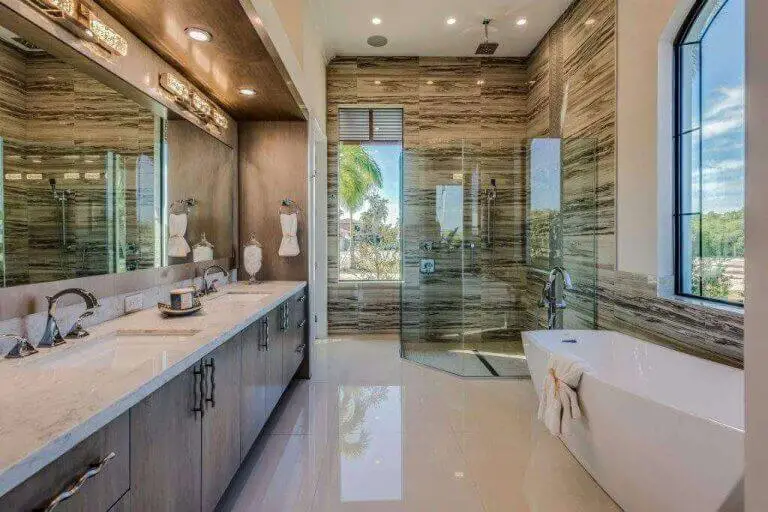
Frameless glass showers remain the foundation of modern master bathroom design in 2026. They create an open layout while showcasing tile work and wall finishes.
From a builder’s perspective, frameless systems also make bathrooms feel larger. Natural light travels freely through the room, which is especially valuable in smaller master suites.
When designing these showers, we often recommend:
- Clear low‑iron glass panels
- Minimal hardware and slim hinges
- Linear drains along the wall
- Floor‑to‑ceiling tile surfaces
The result is a clean architectural look that fits both modern coastal homes and contemporary urban properties.
2. Curb-less Walk‑In Showers for Seamless Floor Design
Curb-less showers remove the step between the bathroom floor and the shower area. This creates a continuous floor plane that looks modern and improves accessibility.
During construction, the floor is carefully sloped toward a drain while waterproofing extends across the entire shower zone. This approach requires precise framing and tile installation.
Benefits homeowners appreciate include:
- Barrier‑free entry
- Cleaner visual lines
- Improved accessibility for aging in place
- Better integration with luxury tile flooring
Curbless designs also connect visually with other areas of the home, just like a seamless transition from interior flooring to a patio or deck outdoors.
3. Large‑Format Tile Walk‑In Shower Walls
Large tile panels are one of the most requested features in modern bathroom remodeling projects. They reduce grout lines and create a cleaner architectural appearance.
These tiles can extend across the entire shower wall, producing a calm visual effect similar to stone slabs used in high‑end kitchens.
Popular material choices include:
- Marble‑look porcelain slabs
- Concrete‑style minimalist tiles
- Textured stone panels
- Oversized matte ceramic tiles
Many homeowners coordinate the shower wall material with vanity backsplashes or flooring to maintain consistency across the bathroom renovation.
4. Spa‑Inspired Walk‑In Showers with Multiple Fixtures
Luxury master bathroom remodels now include multiple water sources within the shower space. Rain heads, handheld sprays, and body jets are common combinations.
These systems require careful plumbing planning during construction. Our design team ensures every fixture aligns with tile layouts and wall framing.
Common spa shower features include:
- Ceiling rain shower heads
- Handheld shower wands
- Integrated body jets
- Built‑in shower benches
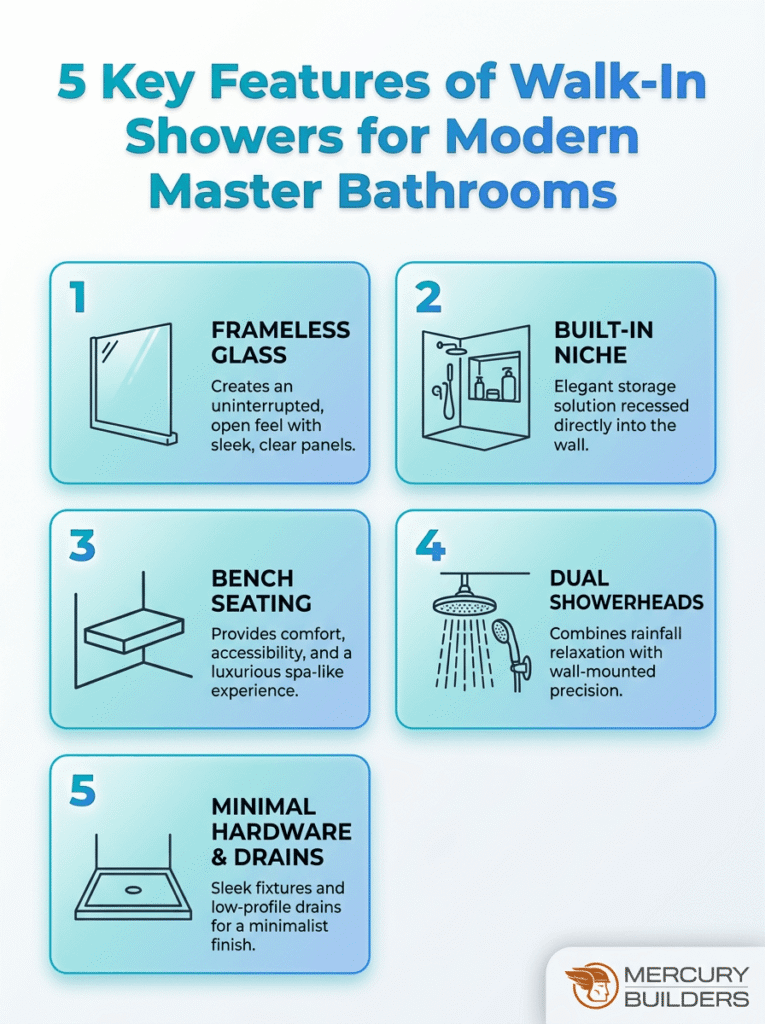
Five essential features define today’s modern master bathroom walk-in showers, as visualized in this infographic.
5. Natural Wood and Stone Shower Wall Accents
Bathrooms are moving away from stark white interiors. In 2026, natural textures like wood panels and stone tile bring warmth to modern walk‑in showers.
These materials are often applied to a single accent wall behind the shower fixtures. The contrast creates visual depth while maintaining a calm and minimal layout.
Many homeowners coordinate these finishes with other areas of the property, including landscape materials, hardscape elements, and exterior patio surfaces.
6. Smart Walk‑In Showers with Integrated Technology
Technology continues to shape bathroom design in 2026. Smart shower systems now allow homeowners to control temperature, pressure, and presets digitally.
These systems often connect with mobile apps or smart home assistants. Homeowners can prepare their shower before stepping into the bathroom.
Features gaining popularity include:
- Digital temperature controls
- Programmable shower presets
- Steam shower integration
- Bluetooth audio systems
For many homeowners planning large renovation projects, these systems are installed during the framing and plumbing stage to ensure clean wall integration.
7. Walk‑In Showers Inspired by Outdoor Living Design
Many coastal homes now mirror outdoor living aesthetics inside the bathroom. Materials used in patios, decks, and landscape design often inspire interior tile and stone selections.
This design approach connects indoor spaces with the exterior environment. Natural textures and neutral tones create a relaxed atmosphere.
Design inspirations often include:
- Stone surfaces similar to patio hardscape
- Wood‑tone tile that resembles deck materials
- Natural lighting from skylights
- Indoor plants or landscape views
8. Built‑In Niches and Storage Walls
Practical storage is a critical part of a well‑designed walk‑in shower. Built‑in niches eliminate the need for bulky metal shelves.
During construction, niches are framed into the shower wall and waterproofed with the rest of the system. This ensures durability and a clean finish.
Popular storage configurations include:
- Horizontal recessed shelves
- Vertical product niches
- Full accent tile niche walls
- Floating corner benches
9. Space‑Optimized Walk‑In Showers for Smaller Master Bathrooms
Not every home has room for a large spa shower, but smart design still delivers luxury. Strategic layout planning allows walk‑in showers to fit comfortably in compact master bathrooms.
Our design team often repositions vanities, expands the shower footprint, and removes unused tubs. These adjustments create a better balance of space and function.
Space‑saving techniques include:
- Corner walk‑in shower layouts
- Sliding glass panels
- Integrated wall storage
- Light colored tile to increase brightness
10. Choosing the Right Builder for a Walk‑In Shower Remodel
A successful bathroom renovation depends on both design and construction expertise. Walk‑in showers require proper waterproofing, tile layout planning, and plumbing coordination.
Working with an experienced builder ensures each detail is handled correctly, from permits to the final walkthrough. This approach reduces delays and protects long‑term durability.
When selecting a contractor for a master bathroom remodel, look for:
- Licensed and insured professionals
- Design‑build experience
- Clear project timelines
- Strong craftsmanship and communication
For homeowners planning a full renovation project, we often coordinate bathroom upgrades alongside other improvements such as kitchen remodeling, landscape updates, deck construction, or patio hardscape installations.
Walk‑in showers have become the centerpiece of modern master bathroom remodels in 2026. Homeowners prioritize larger shower spaces, minimal glass designs, and natural materials that create a calm and functional environment.
From frameless glass layouts to curb-less entries and spa‑style fixtures, the best walk‑in shower designs combine thoughtful planning with expert construction. When handled by an experienced builder, a well‑designed shower becomes one of the most valuable upgrades in any home renovation project.